

2026/10/19
Considering the system reforms of the national government and the Tokyo Metropolitan Government: Evaluation criteria other than cost required for building materials.
Raised Access Floor
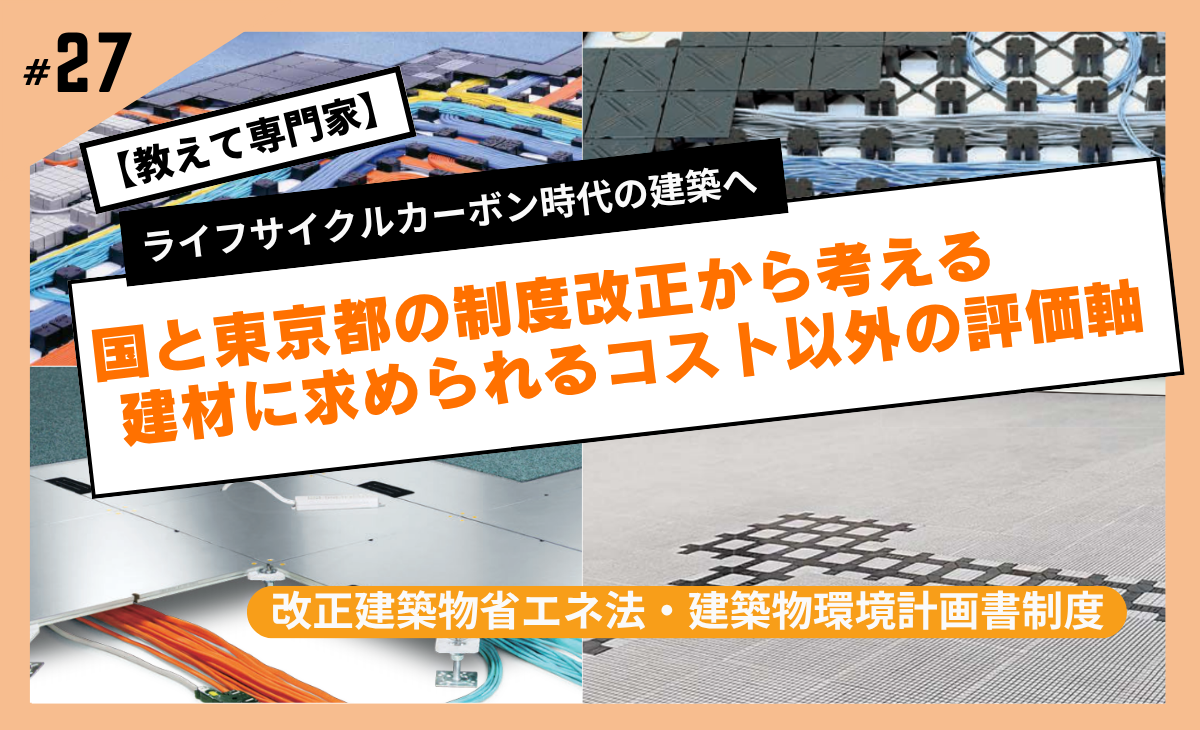
In recent years, the construction industry has focused not only on "energy conservation" but also on "life cycle carbon (LCC)."2Interest in ) *1 is rapidly increasing.
As the environmental assessment of buildings expands from "during operation" to "the entire lifecycle of the building," the era is coming where building materials will also be required to visualize and be accountable for their environmental impact.
In July 2026, the "Act to Amend Part of the Act on the Improvement of Energy Consumption Performance of Buildings, etc." (hereinafter referred to as the Amended Building Energy Conservation Act) will be enacted, and the system is scheduled to be implemented from fiscal year 2028.
The proposed revisions to the building environmental plan system, which the Tokyo Metropolitan Government announced in September 2026, are also being considered in order to align with these national directions.
This time, we will explain the outline of the life cycle carbon assessment system promoted by the national government and the Tokyo Metropolitan Government, and the environmental value of network floors within that system.
*1 Life cycle carbon... CO2 generated throughout the entire life cycle of a building, from the manufacturing of building materials to construction, operation, renovation, and demolition.2emissions.
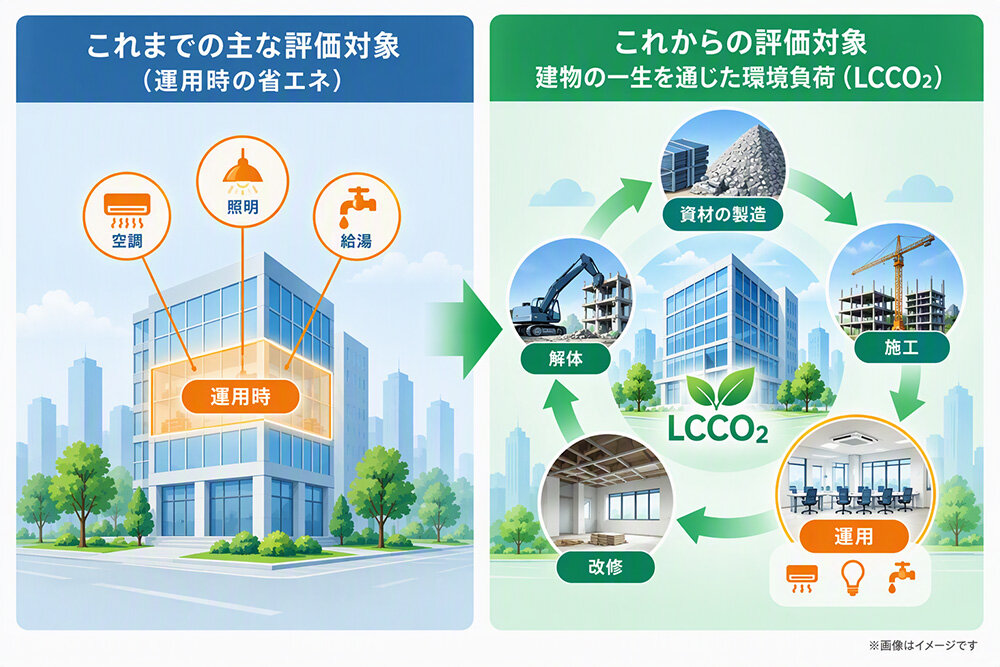
Outline of the revised Building Energy Conservation Act
In recent years, CO2 emissions generated during the operation of buildings have been a concern in the construction sector.2Reducing the environmental impact of a building throughout its entire lifecycle, including not only emissions but also the manufacturing, construction, use, renovation, and demolition of building materials, is a crucial theme.
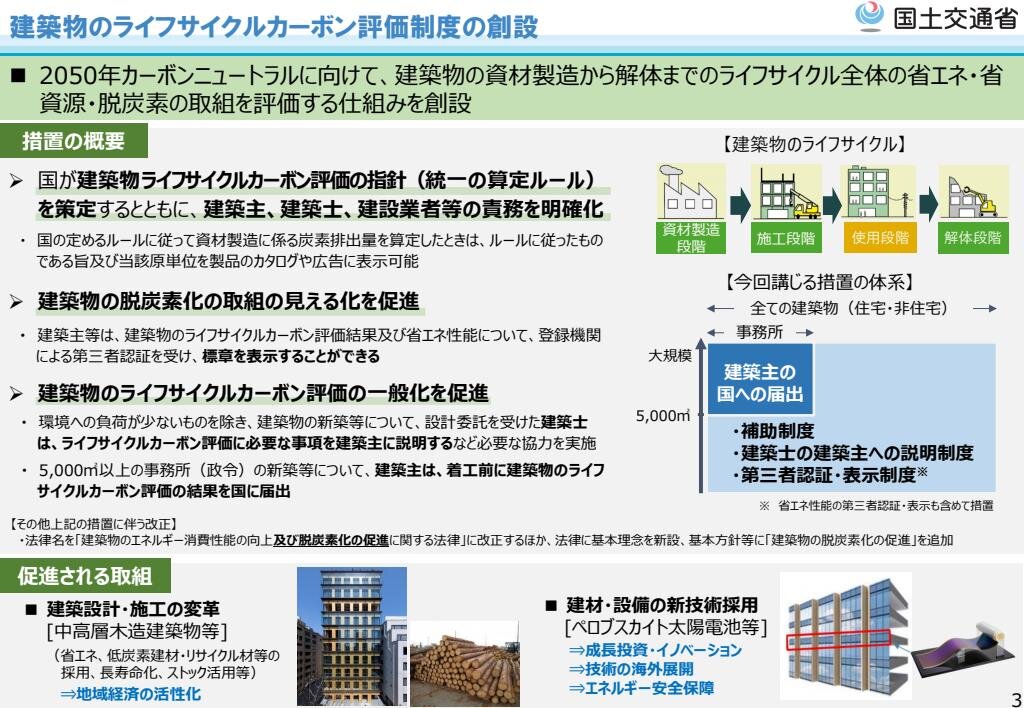
The revised Building Energy Conservation Act institutionalizes this concept and defines the life cycle carbon (LCCO) of buildings.2A system for evaluating ) has been established.
The government plans to establish unified calculation rules and, starting in fiscal year 2028, introduce a system requiring the submission of evaluation results for buildings above a certain size.
As a result, the evaluation of a building's environmental performance is expanding from "energy saving during operation" to "environmental impact throughout the building's lifecycle."
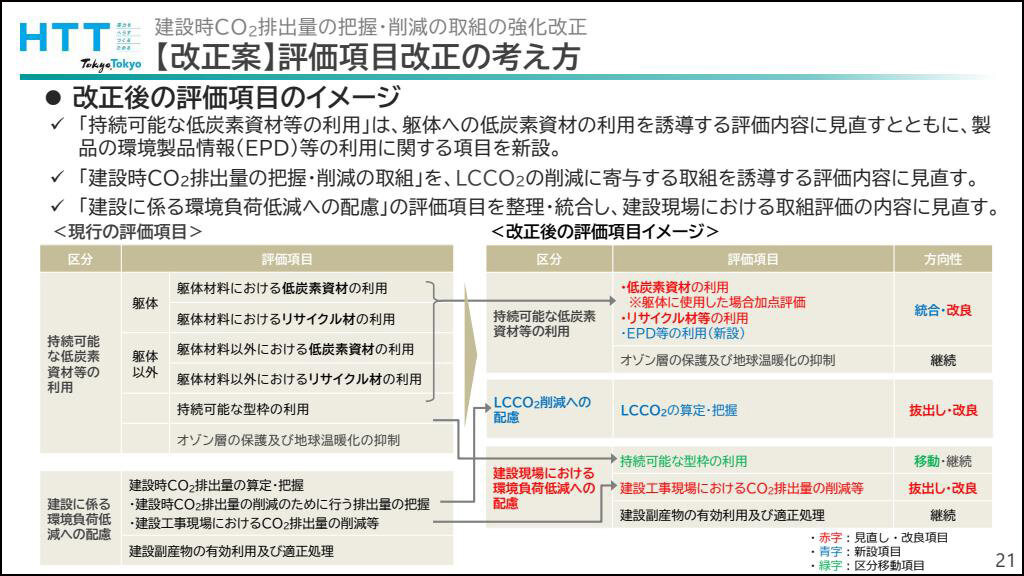
What the Tokyo Metropolitan Government's proposed amendments aim to achieve
The proposed revisions to the building environmental plan system, which the Tokyo Metropolitan Government announced in September 2026, aim to further promote the reduction of life cycle carbon emissions in buildings while aligning with the national system reforms.
The revised bill includes, in addition to the conventional method of tracking CO₂ emissions during construction, life cycle carbon (LCCO) measurements.2The guidelines indicate a direction towards promoting the calculation of environmental impact, the use of low-carbon materials and recycled materials, and the utilization of environmental information such as EPD (Economic Product Declaration).
Furthermore, consideration for extending the lifespan and resource recycling are also positioned as important evaluation factors, and the concept of evaluating buildings throughout their entire lifecycle is being further strengthened.
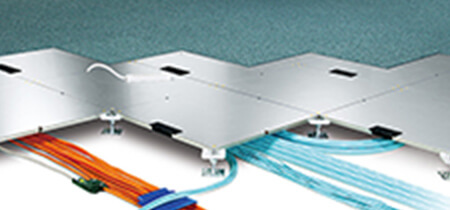
Network flooring is a building material that is highly compatible with the direction required by the system.
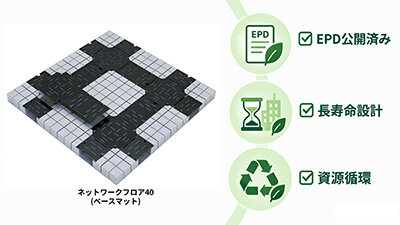 One building material that is highly compatible with the direction of this system is network flooring.
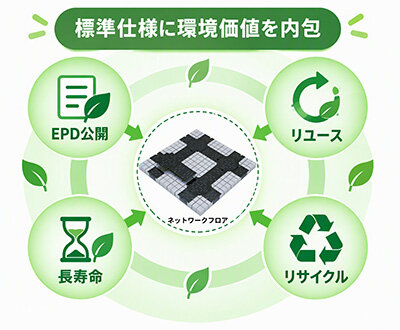
Network Floor publishes EPDs (Expert Data Sheets) that show environmental information about its products, aligning with future regulatory approaches that emphasize lifecycle carbon analysis and transparency of environmental information.
Furthermore, the network floor features a unique structure that suppresses rattling and is designed for long-term use, which aligns with the system's goal of extending the lifespan of buildings.
Furthermore, a major characteristic of our company is that we have been operating a reuse and recycling system for over 20 years, putting a resource circulation mechanism into practice.
Network floor with environmental value as standard feature
 Generally, environmentally friendly building materials may cost more than standard specifications due to factors such as the use of recycled materials, obtaining environmental certifications, and compiling environmental impact data.
On the other hand, Network Floor has incorporated consideration for the global environment as one of its development concepts since its initial launch in 1986.
The operation of reuse and recycling systems and the design of long-life products are not recent additions, but rather initiatives that have been ongoing for many years.
One of the major features of the network floor is that it comes standard with elements required in the era of lifecycle carbon, such as the visualization of environmental information through the publication of EPDs, efforts toward resource recycling, and extended lifespan.
Ecomaterials that support the environmental value of buildings
From the Tokyo Metropolitan Government's proposed amendments, CO2This suggests a direction towards not only reducing emissions but also understanding and mitigating the environmental impact throughout the entire lifecycle of a building.
Network Floor has a high degree of affinity with this direction, through its disclosure of environmental information via EPD, its reuse and recycling system that has been in operation for over 20 years, and its track record as a long-life product.
With growing interest in life cycle carbon, network flooring can be considered a building material that contributes to improving the environmental value of buildings, not only as a flooring material that provides wiring space, but also from the perspectives of visualizing environmental information, resource recycling, and extending lifespan.
If you require more detailed information about the network floor, please feel free to contact us.